Concrete Slab & Foundation Work
Build your home, garage, or addition on a solid foundation with expert concrete slab and foundation services in South Whittier.
Why Your Foundation Matters
Your foundation is literally what everything else sits on. A properly built concrete slab or foundation provides the structural support your home, garage, or building needs to remain stable, level, and safe for decades. Foundation work is serious business, and it requires expertise, attention to detail, and knowledge of local soil conditions and building codes.
Throughout South Whittier, Whittier, Pico Rivera, and surrounding areas, we've poured foundations for new homes, room additions, detached garages, workshops, and commercial buildings. We understand the soil types in this region, know how to handle challenging sites with slopes or drainage issues, and always work with engineers and building inspectors to ensure your foundation meets all requirements.
Foundation problems are expensive and disruptive to fix later, so doing it right the first time is essential. We take pride in our foundation work and stand behind every project with confidence. Whether you're building new construction or adding to an existing structure, you can trust us to provide professional concrete foundation services that give you peace of mind.
Types of Foundation Work We Do
We handle a wide range of concrete slab and foundation projects. Here are the most common types of work we do for homeowners and builders in South Whittier.
Concrete Slab Foundations
A concrete slab foundation is a thick, flat piece of concrete poured directly on the ground. It serves as both the foundation and the floor of the structure. Slab foundations are popular in South Whittier because they work well with our climate, cost less than other foundation types, and provide excellent stability on properly prepared soil.
We build slab foundations for single-family homes, ADUs (accessory dwelling units), garages, workshops, and storage buildings. The process involves careful site grading, moisture barrier installation, proper reinforcement with rebar or mesh, and precise pouring and finishing techniques. Most residential slabs are 4 to 6 inches thick, but we can go thicker if your project requires it for heavy loads or specific engineering needs.
Raised Foundations and Stem Walls
A raised foundation lifts the building off the ground, creating a crawl space underneath. We pour concrete footings below ground level, then build stem walls (short concrete walls) on top of those footings. This type of foundation is necessary for sloped lots, areas with poor drainage, or when you need access to plumbing and utilities under the floor.
Raised foundations cost more than slabs and take longer to build, but they're the right choice for many properties in South Whittier. They provide better ventilation, make it easier to run and repair utilities, and allow you to build on sites that would be difficult or impossible with a slab. We handle all aspects of raised foundation work, from excavating footings to forming and pouring stem walls to the exact specifications your project requires.
Garage and Shed Slabs
Planning to build a detached garage, workshop, or storage shed? You need a solid concrete slab to support the structure. We pour garage and shed slabs designed to handle the weight of vehicles, equipment, and whatever you plan to store inside. These slabs include proper slope for drainage, control joints to manage cracking, and smooth finishes that are easy to clean.
Garage slabs typically need to be thicker than regular patio slabs to handle vehicle weight. We recommend at least 4 inches of concrete, and 6 inches if you have large trucks or heavy equipment. We also make sure the slab extends properly beyond the walls and integrates well with your existing driveway or parking area.
Addition Foundations
Adding a room to your house? Expanding your living space with a sunroom, bedroom, or home office? The foundation for your addition needs to match the existing house foundation in both type and elevation. We work carefully to ensure proper connection between old and new, handle any necessary grading and drainage work, and make sure the new foundation meets current building codes even if your existing house was built under older standards.
The Foundation Construction Process
Building a foundation is a multi-step process that requires precision and expertise. Here's what goes into a typical foundation project in South Whittier.
Site Evaluation and Planning
Before we break ground, we evaluate your site carefully. We look at the soil type, drainage patterns, slope, and proximity to existing structures. Many foundation projects require consultation with a structural engineer, especially for larger buildings or challenging sites. The engineer designs the foundation to meet load requirements and local codes, and we build exactly to those specifications.
We also coordinate with local building departments to obtain the necessary permits. Foundation work always requires permits and inspections, and we handle that process for you. Our experience with South Whittier building codes and inspectors helps projects move smoothly through the permitting and inspection stages.
Excavation and Grading
Once permits are in place, excavation begins. We remove topsoil and dig down to stable soil, creating a level base for the foundation. For slab foundations, this might mean removing 12 to 18 inches of material. For raised foundations with footings, we dig trenches to the depth specified by the engineer, often 18 to 24 inches or deeper depending on frost line requirements and soil conditions.
After excavation, we grade and compact the soil to create a stable base that won't settle. This is critical work that affects the long-term performance of your foundation. We use proper compaction equipment and techniques to ensure the soil can support the weight of the structure above it.
Plumbing and Utilities
For most slab foundations, plumbing lines need to be installed before the concrete is poured. We work with licensed plumbers to make sure all drain lines, water supply lines, and any other utilities are properly positioned and tested. These lines are laid in trenches in the gravel base, carefully positioned, and inspected before we proceed.
Getting plumbing right at this stage is essential because you can't easily access these lines once the slab is poured. We take extra care to protect pipes during the pour, make sure they're at the correct depths and locations, and verify everything with the plumber and inspector before moving forward.
Base Preparation and Moisture Barrier
We install a gravel base, typically 4 to 6 inches of crushed rock, over the compacted soil. This base layer provides drainage and helps prevent moisture from wicking up into the concrete. We compact this gravel thoroughly to create a solid, level surface for the foundation.
Next comes the moisture barrier, usually a thick plastic vapor barrier that prevents ground moisture from moving up through the concrete. This is especially important in South Whittier where we can have periods of rain followed by dry weather. The vapor barrier protects your floors from moisture damage and helps prevent mold and mildew problems inside your building.
Reinforcement and Forms
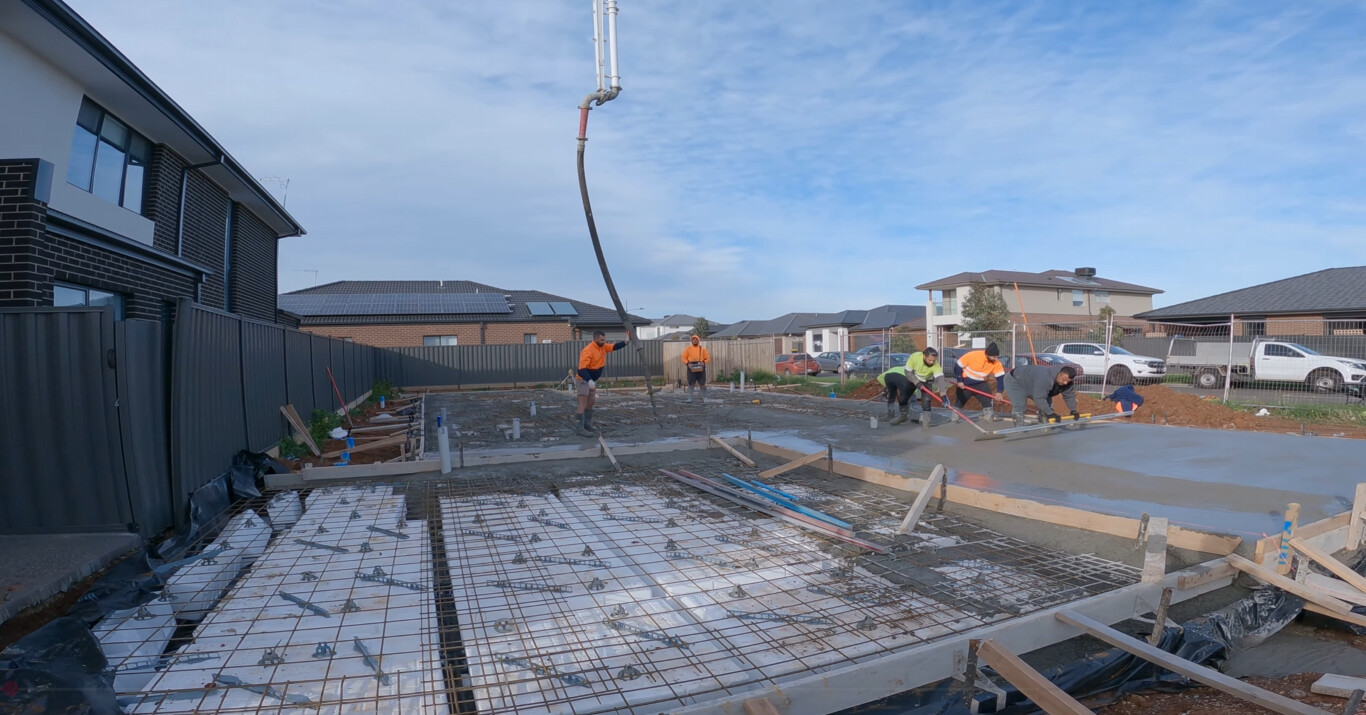
Steel reinforcement gives concrete foundations the strength they need to resist cracking and support heavy loads. For slab foundations, we install a grid of rebar or heavy wire mesh positioned in the lower third of the slab thickness. For raised foundations and stem walls, rebar is placed both vertically and horizontally according to engineering specifications.
We also set up forms, which are temporary wooden or metal structures that hold the concrete in place while it cures. Forms must be perfectly level and positioned correctly, with proper bracing to prevent them from shifting when we pour the concrete. Our crew takes care to ensure forms are accurate because they define the final shape and dimensions of your foundation.
Concrete Pour and Finishing
Pour day is when everything comes together. Concrete trucks arrive on schedule, and we work quickly to place the concrete before it starts to set. We use high-strength concrete mix designed for foundation work, typically with a minimum compressive strength of 3000 PSI or higher depending on engineering requirements.
As we pour, we use vibrators to eliminate air pockets and ensure the concrete flows around the reinforcement and fills all voids. We level the surface carefully, making sure water will drain away from the building. For slab foundations that will be visible, we finish the surface smooth or add texture as needed.
Curing and Inspection
After the pour, the concrete needs time to cure properly. We keep the concrete moist for several days to ensure it develops full strength. In hot weather, we might use curing blankets or spray-on curing compounds to prevent the concrete from drying too quickly, which can cause cracking.
Building inspectors will examine the foundation at various stages, including after the forms and reinforcement are in place, after the pour, and sometimes during the curing period. We coordinate these inspections and make sure everything meets code requirements. Once the foundation passes final inspection, construction can proceed with framing and the rest of the building.
Working with Builders and Contractors
Many of our foundation projects come from builders and general contractors who trust us to handle the concrete work for their construction projects. We work as part of your construction team, coordinating schedules, communicating clearly, and delivering quality work on time and on budget.
Whether you're a homeowner managing your own construction project or a builder who needs a reliable concrete subcontractor, we bring professionalism and expertise to every job. We understand the importance of staying on schedule in construction, and we pride ourselves on being dependable partners throughout the building process.
Frequently Asked Questions
Here are answers to common questions about concrete slab and foundation work in South Whittier.
How long does it take to pour a concrete slab foundation?
Do I need a permit for foundation work?
What's the difference between a slab foundation and a raised foundation?
Get Started with Your Foundation Project
Whether you're building a new home, adding a room, or constructing a garage, your project deserves a solid foundation built by experienced professionals. We serve South Whittier and all surrounding communities with reliable, high-quality concrete foundation services.
Contact us today for a free consultation and quote. We'll visit your site, discuss your project, answer your questions, and provide a detailed estimate. With our expertise and commitment to quality, you can be confident your foundation will be built right the first time.