Retaining Walls & Concrete Masonry
Build strong, attractive retaining walls that hold back soil, prevent erosion, and create usable flat areas on sloped South Whittier properties.
Why You Might Need a Retaining Wall
Retaining walls serve both functional and aesthetic purposes. If your property has slopes or elevation changes, a retaining wall can solve several problems at once. It holds back soil to prevent erosion and landslides, creates level areas where you can build patios or gardens, and adds structure and visual interest to your landscaping. Many South Whittier properties sit on hillsides or have yards with significant grade changes, making retaining walls essential for maximizing usable space.
Beyond preventing erosion, retaining walls help manage water drainage on sloped properties. They can redirect runoff, prevent soil from washing away during rain, and protect your home's foundation from water damage. Well-designed retaining walls also add considerable value to your property by making more of your land usable and improving overall appearance. A slope that was once just grass or brush can become terraced gardens, entertainment areas, or attractive landscaping features.
When you need professional concrete work in South Whittier, retaining walls require special expertise. These structures must withstand tremendous pressure from the soil behind them. Poor design or construction can lead to wall failure, which is dangerous and expensive to fix. We have the engineering knowledge and construction experience to build retaining walls that last for decades while looking great.
Types of Retaining Walls We Build
We offer several types of retaining wall construction, each suited to different situations, budgets, and aesthetic preferences.
Concrete Block Retaining Walls
Concrete block walls use interlocking masonry blocks specifically designed for retaining wall applications. These blocks come in various styles, colors, and textures, from smooth modern finishes to textured stone appearances. They're engineered to handle significant loads and can be stacked to create walls of different heights. The interlocking design makes them stable, and many systems include built-in drainage features. Concrete block walls are popular because they combine strength, affordability, and good looks.
Poured Concrete Retaining Walls
For maximum strength and custom designs, poured concrete walls are hard to beat. We build forms, install heavy-duty reinforcement, and pour concrete to create solid, monolithic walls. These walls handle the highest loads and can be built to any height needed. We can create smooth finishes, apply textures, or add decorative elements like caps and pillars. Poured concrete walls work especially well for tall installations or where you need absolute maximum strength.
Natural Stone and Veneer Walls
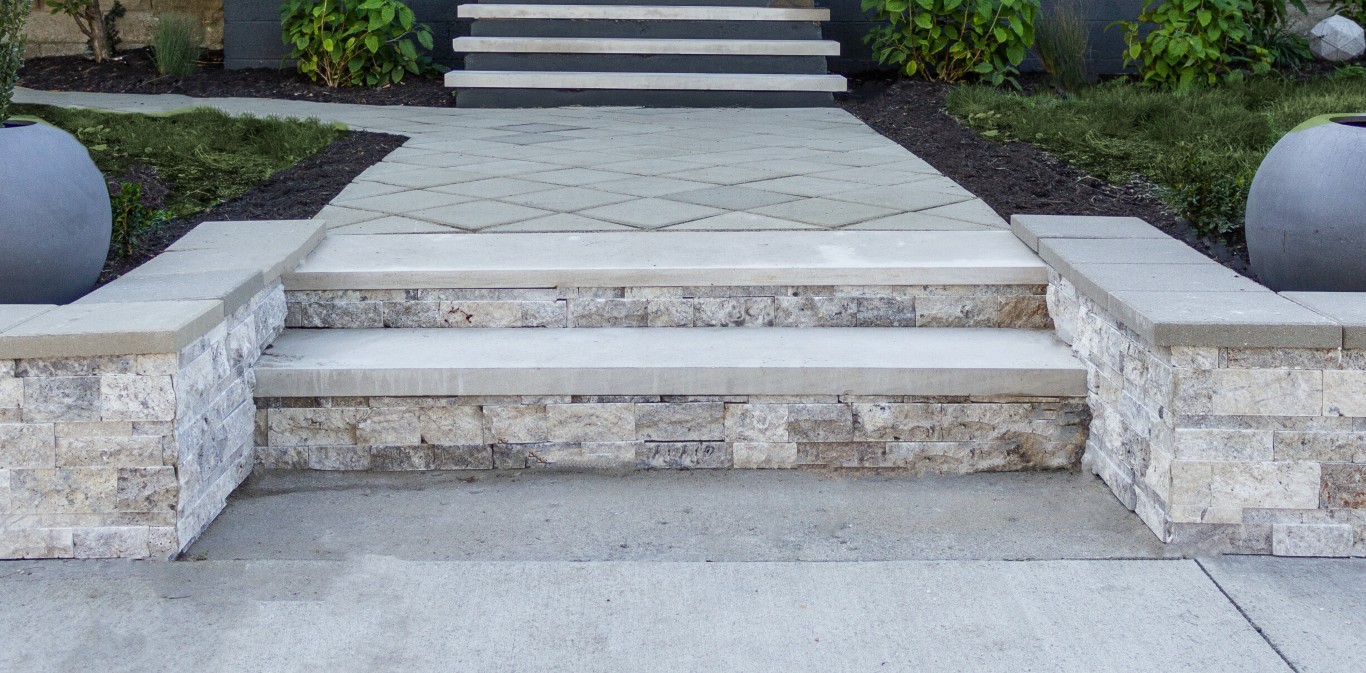
For a more natural, rustic appearance, we build walls using natural stone or apply stone veneer over concrete structures. Natural stone walls fit beautifully in garden settings and complement Mediterranean or craftsman-style homes. Stone veneer gives you the authentic look of stacked stone at lower cost since we're applying thin stone pieces over a concrete core. These walls add organic beauty to your landscaping while providing all the structural benefits of properly engineered retaining walls.
Terraced Wall Systems
For very steep slopes, we often recommend terracing, which uses multiple shorter walls instead of one tall wall. This approach is safer, often more cost-effective, and creates interesting multi-level landscaping opportunities. Each terrace can be planted, used as a pathway, or designed as a separate garden area. Terraced systems handle drainage better than single tall walls and offer more design flexibility for your property.
Critical Elements of Retaining Wall Construction
Building retaining walls right requires attention to several key factors. Here's what we focus on to ensure your wall stands strong for years.
- •Proper Foundation: Every retaining wall needs a solid foundation. We excavate below the frost line and create a level, compacted base, often using crushed rock and concrete footings. The foundation must be strong enough to support the wall and the soil pressure behind it. Skimping on foundation work leads to settling, tilting, and eventual failure.
- •Drainage Systems: Water is the biggest threat to retaining walls. Water-saturated soil weighs much more than dry soil and puts tremendous pressure on walls. We install drainage pipes behind the wall to channel water away, use gravel backfill that drains easily, and include weep holes that allow water to escape. Good drainage is absolutely essential for long-lasting retaining walls.
- •Reinforcement: Depending on the wall height and soil conditions, we use various reinforcement techniques. This might include steel rebar in concrete walls, geogrid fabric that extends into the soil behind the wall, or special tie-backs that anchor the wall to stable ground. Reinforcement distributes loads and prevents cracking or toppling.
- •Proper Backfill: The material we place behind the wall matters enormously. We use free-draining gravel near the wall, compact it carefully to prevent settling, and ensure the backfill doesn't put excessive pressure on the wall. Proper backfill technique protects your investment and extends wall life.
- •Engineering and Permits: Retaining walls over a certain height require engineering calculations and building permits. We work with engineers when needed to ensure your wall meets all structural requirements and safety standards. We handle permit applications and inspections so you don't have to worry about compliance issues.
These elements work together to create retaining walls that perform reliably for decades. We never cut corners on the critical components that keep walls standing strong, even when they're hidden from view.
Design Considerations and Options
Retaining walls don't have to be purely functional. With thoughtful design, they become attractive landscape features that enhance your property.
Height and Placement
The height and location of your wall depend on your property's topography and what you want to accomplish. Shorter walls under 4 feet are simpler to build and often don't require engineering. Taller walls need more robust construction and engineering oversight. We assess your property to determine the best wall placement, considering drainage patterns, existing structures, property lines, and how you want to use the space.
Curves and Corners
Walls don't have to run in straight lines. Curved retaining walls create softer, more natural appearances that work beautifully in landscaping. Corners and angles help walls follow property contours or define specific areas. We can create complex shapes that match your vision while maintaining structural integrity. Curved walls actually gain some strength from their shape, making them both attractive and functional.
Integrated Features
We can incorporate various features into your retaining wall design. Built-in planters add greenery and soften the wall's appearance. Steps can be integrated right into the wall structure for access between levels. Lighting fixtures mounted in or on the wall provide illumination and nighttime visual interest. Seating areas, fire pit surrounds, and decorative columns are other options that make retaining walls multifunctional landscape elements.
Finishing and Colors
The visible face of your retaining wall offers many design possibilities. Concrete block walls come in numerous colors and textures. Poured concrete walls can be smooth, textured, or stamped. Stone walls provide natural, organic beauty. We can add caps along the top for a finished look, apply stucco or stone veneer, or leave concrete with an attractive architectural finish. The right finish makes your wall complement your home and landscaping perfectly.
Frequently Asked Questions
Here are answers to common questions about retaining walls and concrete masonry in South Whittier.